

What Depression Actually Feels Like Day to Day
Depression is not just sadness. It is a heavy weight that presses down on everything. Getting out of bed feels impossible. Meals get skipped. Showers get skipped. The things you used to love start to feel hollow and far away.
Many people living with depression describe a deep sense of disconnection. From friends. From family. From themselves. That disconnection is one of the most painful parts of the illness. And it is also exactly where a support animal can make a real difference.
The depression support animal relationship is not a cure. Depression is a clinical condition that often requires professional treatment. But for millions of people, the presence of a support animal has changed the texture of daily life in ways that matter deeply.
What the Therapeutic Bond Between Human and Animal Really Means
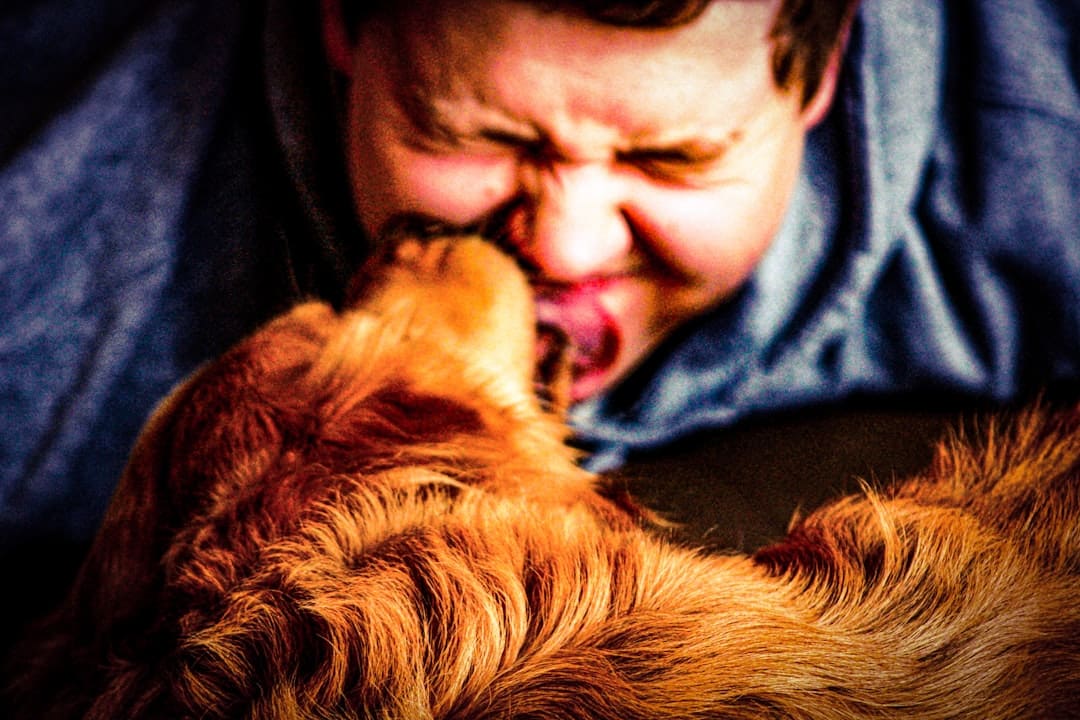
The phrase "therapeutic bond" sounds clinical. But the idea behind it is simple. When you have a genuine connection with an animal, something shifts in your nervous system. Your heart rate slows. Your breathing steadies. The mental noise gets a little quieter.
This bond develops through proximity, care and repetition. You feed your animal. You touch them. They respond to you. Over time your brain begins to associate their presence with safety. That association is powerful when depression has made the world feel threatening or empty.
At TheraPetic® Healthcare Provider Group, our Licensed Clinical Doctors see this pattern consistently. Clients who integrate a support animal into their care often describe moments of genuine calm they had not felt in months. The bond itself becomes part of the treatment environment.
How Support Animals Create Routine and a Sense of Purpose
Depression attacks structure. When you are depressed, days blur together. There is no reason to get up at a certain time. No reason to go outside. No reason to eat a real meal. The absence of structure makes depression worse.
A support animal changes that immediately. An animal needs to be fed at regular times. They need to go outside. They need interaction and care. That need does not disappear because you are having a hard day.
This is not a burden. It is an anchor. Our clinical team observes that clients with support animals often describe the animal's daily needs as the one thing that pulled them out of bed during their worst stretches. Purpose does not have to feel grand. Sometimes it just means filling a food bowl at 7 a.m.
The routine built around a support animal creates a gentle scaffold of predictability. Predictability is healing when depression has made everything feel chaotic and unmanageable.
The Role of Social Connection in Recovering From Depression
Depression tells you to isolate. It says no one wants to see you. It says you are a burden. It makes it easy to cancel plans and stay home. Over time isolation deepens the depression. It becomes a cycle that is very hard to break alone.
Support animals interrupt that cycle in two important ways.
First they provide direct companionship. You are never fully alone when your animal is with you. That presence is not imagined. It is physical, warm and responsive. Your animal notices when you cry. They move closer. They do not offer advice or judgment. They simply stay.
Second animals create opportunities for human connection. Walking a dog leads to conversations with neighbors. Mentioning your cat at work opens up a friendly exchange. Research supported by the National Institutes of Health has found that pet ownership is associated with increased social interactions in community settings. Those small moments of human contact can serve as a bridge back toward fuller social engagement.
If you are living with depression and wondering whether a support animal might be right for your situation, our free screening process can help you figure out your options quickly and without pressure.
Unconditional Positive Regard: The Gift Only an Animal Can Give
In clinical psychology, unconditional positive regard is the practice of accepting a person completely without judgment. It is one of the core conditions for healing in therapeutic relationships. Carl Rogers identified it decades ago as essential to meaningful change.
Animals practice it naturally. They do not care what you look like. They do not care that you have not showered. They do not track your failures or compare you to who you used to be. They respond to who you are right now, in this moment, in this room.
For someone living with depression, that experience of being loved without condition can be quietly transformative. Depression generates a relentless internal critic. That critic says you are worthless. Your animal disagrees with every wag, every purr, every insistent nudge of their head against your hand.
It sounds simple. It is simple. That is the point. The depression support animal relationship does not require you to perform wellness you do not feel. It meets you exactly where you are.

What Clinical Research Tells Us About Animal Support and Depression
The evidence base for animal-assisted support has grown considerably. Here is what the research actually shows, without overstating it.
Studies published through the National Institutes of Health have examined the physiological effects of human-animal interaction. Interacting with a familiar animal reliably reduces cortisol, which is the body's primary stress hormone. It also increases oxytocin, a neurochemical associated with bonding, trust and emotional regulation. Both of those shifts are relevant to depression.
A 2026-era body of research reviewed by the Human Animal Bond Research Institute found consistent associations between support animal ownership and reduced depressive symptom severity in adults with diagnosed mood disorders. These were not miracle cures. They were measurable improvements alongside other forms of treatment.
Our clinical team, led by Dr. Patrick Fisher, PhD, LPC, NCC, BC-TMH, C-AAIS, grounds our documentation approach in this evidence base. His doctoral research on support animal therapeutic outcomes informs how TheraPetic® evaluates clients and structures recommendations. We do not guess. We apply clinical judgment built on real evidence.
It is also worth being honest about what research does not show. Animal support alone is not a substitute for therapy, medication or psychiatric care when those are indicated. The strongest outcomes appear when animal support is part of a broader treatment plan. That is the framework we use at TheraPetic® Healthcare Provider Group.
The National Institutes of Health maintains publicly accessible summaries of human-animal interaction research for anyone who wants to explore the science directly.
Getting the Right Documentation for Your Support Animal
Understanding the therapeutic value of a support animal is one thing. Getting the proper documentation to protect your rights is another. These are two separate steps and both matter.
Under the Fair Housing Act, a person with a disability including a qualifying mental health condition has the right to request a reasonable accommodation for a support animal in housing. That includes housing that otherwise has a no-pets policy. It also means landlords cannot charge a pet deposit for a properly documented support animal.
To exercise these rights you need a letter from a Licensed Clinical Doctor or other qualified healthcare provider. The letter must reflect a real clinical relationship and genuine assessment of your condition. It cannot be purchased from a random website in five minutes. Housing providers are permitted to request documentation that is legitimate and relevant.
As a 501(c)(3) nonprofit healthcare provider, TheraPetic® Healthcare Provider Group exists specifically to make this process accessible to people who need it. Our Licensed Clinical Doctors conduct real assessments. Our documentation is prepared according to current federal guidance from the Department of Housing and Urban Development.
You can learn more about what a legitimate support animal letter includes by visiting our support animal letter guide on our website. It walks through what housing providers are allowed to ask for and what they are not.
Our process starts with a simple eligibility screening. It takes only a few minutes and gives you a clear picture of where you stand before committing to anything. Visit go.mypsd.org to get started.
Your Next Step Toward Healing
Depression is serious. It deserves serious care. That care can take many forms and for many people a support animal is one meaningful part of it.
The depression support animal bond works because it is real. It is not a technique or a strategy. It is a relationship. And relationships, even the ones between a person and their cat or dog, have the power to reshape how safe and connected we feel in the world.
If you are living with depression and you believe an animal could support your mental health, you do not have to figure this out alone. TheraPetic® Healthcare Provider Group was built to help people like you navigate the clinical and legal landscape with clarity and compassion.
Our mission as a nonprofit is straightforward: make sure that people who need support animal documentation can access it through a process that is honest, clinically grounded and affordable. We have helped thousands of individuals secure their housing rights and build healthier lives alongside their animals.
Start with our free eligibility screening at go.mypsd.org. Or reach out to our team directly at help@mypsd.org or by calling (800) 851-4390. We are here to help you take the next step.
Written By
Ryan Gaughan, BA, CSDT #6202 — Executive Director
TheraPetic®® Healthcare Provider Group • About • LinkedIn • ryanjgaughan.com
Clinically Reviewed By
Dr. Patrick Fisher, PhD, NCC, BC-TMH, C-AAIS — Founder & Clinical Director • The Service Animal Expert™
Editorial Review
This article was reviewed by Dr. Patrick Fisher, PhD, NCC, BC-TMH, C-AAIS on May 19, 2026 for accuracy, currency, and clarity. Content is updated when laws or guidance change.