

When people start researching psychiatric service dog breeds, they often expect a simple list. Pick from column A, train, done. The real answer is more nuanced than that and also more hopeful. The right dog for psychiatric service work is less about breed and more about the individual animal in front of you. That said, certain breed characteristics do make the journey easier. Understanding what to look for can save you months of frustration and help your dog thrive in this important role.
Any Breed Can Qualify
This is the first thing to understand. Under the Americans with Disabilities Act, a psychiatric service dog is defined by what the dog does, not what breed it belongs to. No federal law restricts service dog work to specific breeds. A Chihuahua trained to perform a specific psychiatric service task has the same legal standing as a German Shepherd trained for the same purpose.
That said, legal eligibility and practical suitability are two different things. Some dogs take to service work naturally. Others struggle with the demands no matter how much training they receive. The goal of this guide is to help you understand which characteristics to prioritize so you can make the best choice for your specific mental health needs.
At TheraPetic® Healthcare Provider Group, our Licensed Clinical Doctors work with clients who use all kinds of dogs in service roles. We are a 501(c)(3) nonprofit, and part of our mission is making sure people have accurate, clear information before they begin this process.
Why Temperament Comes Before Breed

Temperament is the single most important factor in psychiatric service dog work. A dog's temperament is its natural emotional wiring. It includes how the dog responds to stress, strangers, loud noises, unpredictable environments and physical contact.
A psychiatric service dog needs to stay calm when you are not calm. That is the job. When you are having a panic attack in a grocery store, your dog cannot be spinning in circles or barking at a cart. The dog needs to ground you, not escalate the situation.
The key temperament traits to look for include:
- Emotional stability: The dog recovers quickly from startling events and does not stay in a heightened state.
- Human focus: The dog naturally wants to be near its person and pays attention to human emotional cues.
- Low reactivity: The dog does not lunge, bark excessively or become aggressive when encountering new stimuli.
- Confidence: The dog moves through new environments without shutting down, freezing or becoming fearful.
- Gentleness: The dog tolerates physical contact including hugging, leaning and deep pressure without resistance.
These traits exist on a spectrum within every breed. Two Labrador Retrievers from the same litter can have very different temperaments. This is why evaluating the individual dog matters as much as knowing the breed tendencies.
Breed Characteristics That Suit Psychiatric Service Work
While no breed guarantees success, certain breed characteristics make psychiatric service work more accessible. Breeds developed for close human partnership tend to do well. Working breeds, sporting breeds and companion breeds each bring different strengths.
Working and sporting breeds were developed to stay focused alongside a human for long stretches. They often handle public access environments well because they were bred for sustained attention and task completion. These dogs generally tolerate repetitive training and are motivated by structured work.
Companion breeds were specifically developed to live closely with humans, read emotional states and provide comfort. They tend to be highly attuned to their person's mood, which makes them natural fits for tasks like interrupting dissociation or providing tactile grounding during anxiety episodes.
Retrievers and poodle-type dogs often appear in service dog conversations because of their combination of trainability, gentle mouth, social ease and low-to-moderate reactivity. These are tendencies, not guarantees.
What you want to avoid are breeds with strong independent streaks that make them resistant to direction, or breeds with very high prey drive that struggle to stay focused around distractions. This does not make those dogs bad. It just means service work will require far more effort, and some may not reach the reliability level required for public access.
Size Considerations for Service Dog Tasks
Size matters, but not in the way most people assume. Bigger is not automatically better. The right size depends entirely on the tasks your dog needs to perform.
For deep pressure therapy (DPT): This task involves the dog applying its body weight across the person's lap, chest or legs to reduce anxiety and interrupt panic responses. For DPT to be effective, many clinicians and trainers suggest the dog weigh at least 30 to 35 pounds. A larger dog in the 50 to 80 pound range can apply meaningful pressure to an adult. A smaller dog can perform modified versions, but the effect is reduced.
For grounding and tactile tasks: A medium-sized dog works well. The dog can be redirected to place a paw on the person's leg, nuzzle a hand or make consistent body contact without becoming overwhelming.
For alerting tasks: Size is largely irrelevant. A small dog can alert to the onset of a panic attack just as reliably as a large one.
For public access and housing: A very large dog can create challenges in small apartments or crowded public spaces. A very small dog may not project the calm, grounded presence that helps regulate your nervous system in a crisis. Medium-sized dogs in the 25 to 65 pound range often strike the best balance for most living situations.
Think honestly about your home, your transportation and the environments you move through daily. Your dog needs to be comfortable in those spaces too.
Trainability and What It Actually Means
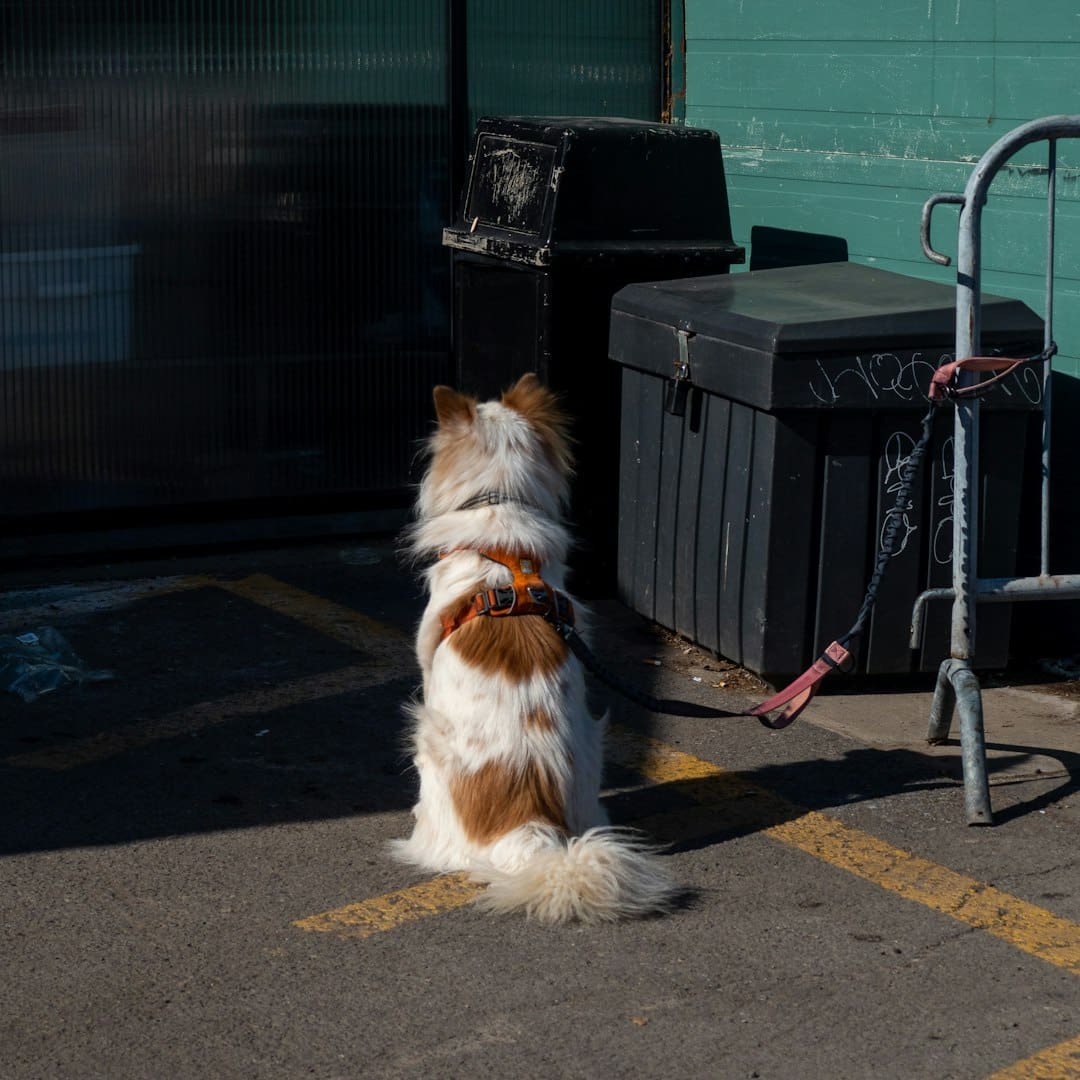
Trainability is not just about how fast a dog learns commands. It is about how consistently a dog can apply learned behaviors under stress. A dog that sits perfectly in your living room but cannot perform the same task in a busy waiting room has not been trained for service work. It has been trained for a living room.
True trainability for service work involves three things:
- Motivation: The dog responds reliably to rewards and wants to engage with training. Food motivation, toy motivation and social motivation all work. A dog that does not want to interact is difficult to build a working partnership with.
- Generalization: The dog can perform its learned tasks across different environments, sounds, smells and situations. This is developed through consistent proofing in public settings.
- Stress tolerance during task performance: The dog can execute its trained psychiatric service task even when it is mildly uncomfortable or uncertain. This is the hardest thing to train and the most important for real-world reliability.
Breeds known for strong food motivation and a desire to work closely with their handler tend to generalize faster. Golden Retrievers, Standard Poodles, Labrador Retrievers, Border Collies and Collies all show up frequently in service dog programs for this reason. But again, these are trends within a population, not promises about individual dogs.
If you want to understand what tasks are commonly trained for psychiatric service work, our psychiatric service dog tasks page breaks down the most common options by mental health condition.
A Closer Look at Commonly Chosen Breeds
Here is an honest, practical look at some breeds that appear often in psychiatric service work. None of these are endorsements. They are patterns our team has observed over years of working with clients.
Golden Retriever: Consistently human-focused, gentle and socially easy. Tends to read emotional cues well. High food motivation makes training accessible. Can be prone to distraction with new people, which requires early proofing.
Labrador Retriever: Athletic, even-tempered and highly adaptable to different environments. Strong trainability. May have high energy in younger years that requires consistent exercise and structure before they can settle in public.
Standard Poodle: Highly intelligent and emotionally sensitive. Responds quickly to training. Lower shedding is a practical benefit for some owners. Can be more sensitive to harsh handling, so positive reinforcement methods are important.
German Shepherd: Loyal, focused and extremely trainable. Common in working dog contexts. Can carry higher reactivity that requires careful socialization and an experienced handler. Not the best choice for first-time service dog owners in most cases.
Border Collie: Remarkable intelligence and work drive. Can perform complex tasks reliably. Needs significant mental stimulation or may develop anxiety-based behaviors that conflict with service work.
Cavalier King Charles Spaniel: Naturally attuned to human emotion. Excels at tactile comfort tasks. Smaller size limits DPT but makes it ideal for apartment living. Health considerations should be reviewed carefully with a veterinarian before selecting this breed.
Mixed breeds: Often healthy, emotionally stable and highly trainable. Individual assessment matters most here.
Mixed Breeds and Rescue Dogs
One of the most common questions we hear is: can a rescue dog become a psychiatric service dog? The answer is yes, with the right temperament evaluation and training commitment.
Rescue dogs often make outstanding service animals. Many have already been through difficult situations and developed resilience as a result. The key is a thorough temperament evaluation before you invest significant time and resources in training. A professional evaluator or experienced trainer can assess the dog's reactivity, stress recovery, human focus and socialization history.
What you cannot assess in a shelter environment is how the dog will behave after several weeks of decompression in a home. Many dogs need time to settle before their true temperament emerges. If possible, foster first before formally committing to service dog training.
Breed-specific rescue organizations can also be a great resource. A rescue Golden Retriever that has been assessed, medically cleared and fostered may offer a more predictable starting point than an unknown mixed-breed puppy.
For more on the full evaluation process and what documentation supports your service dog, our free screening tool can help you understand whether a psychiatric service dog is the right fit for your situation.
How to Get Started with Your Psychiatric Service Dog
Choosing the right dog is just the beginning. To have a legally recognized psychiatric service dog under the Americans with Disabilities Act, two things must be true. First, the person must have a documented mental health disability. Second, the dog must be trained to perform at least one specific task directly related to that disability.
A letter from a Licensed Clinical Doctor documenting your disability and the therapeutic necessity of a service animal is a foundational part of this process. TheraPetic® Healthcare Provider Group connects patients with our team of Licensed Clinical Doctors who provide thorough clinical evaluations and documentation that meets current federal standards.
As a 501(c)(3) nonprofit, our mission is to make this process accessible. We believe that cost should not be a barrier to mental health support, and our team works to provide compassionate, clinically sound documentation for those who qualify.
You can start the process at any time. Use our free eligibility screening to find out if you qualify, or reach out directly at help@mypsd.org or (800) 851-4390. Our team is here to help you take the next step with confidence.
The right dog is out there. Knowing what to look for makes all the difference.
Written By
Ryan Gaughan, BA, CSDT #6202 — Executive Director
TheraPetic®® Healthcare Provider Group • About • LinkedIn • ryanjgaughan.com
Clinically Reviewed By
Dr. Patrick Fisher, PhD, NCC, BC-TMH, C-AAIS — Founder & Clinical Director • The Service Animal Expert™
Editorial Review
This article was reviewed by Dr. Patrick Fisher, PhD, NCC, BC-TMH, C-AAIS on June 4, 2026 for accuracy, currency, and clarity. Content is updated when laws or guidance change.